
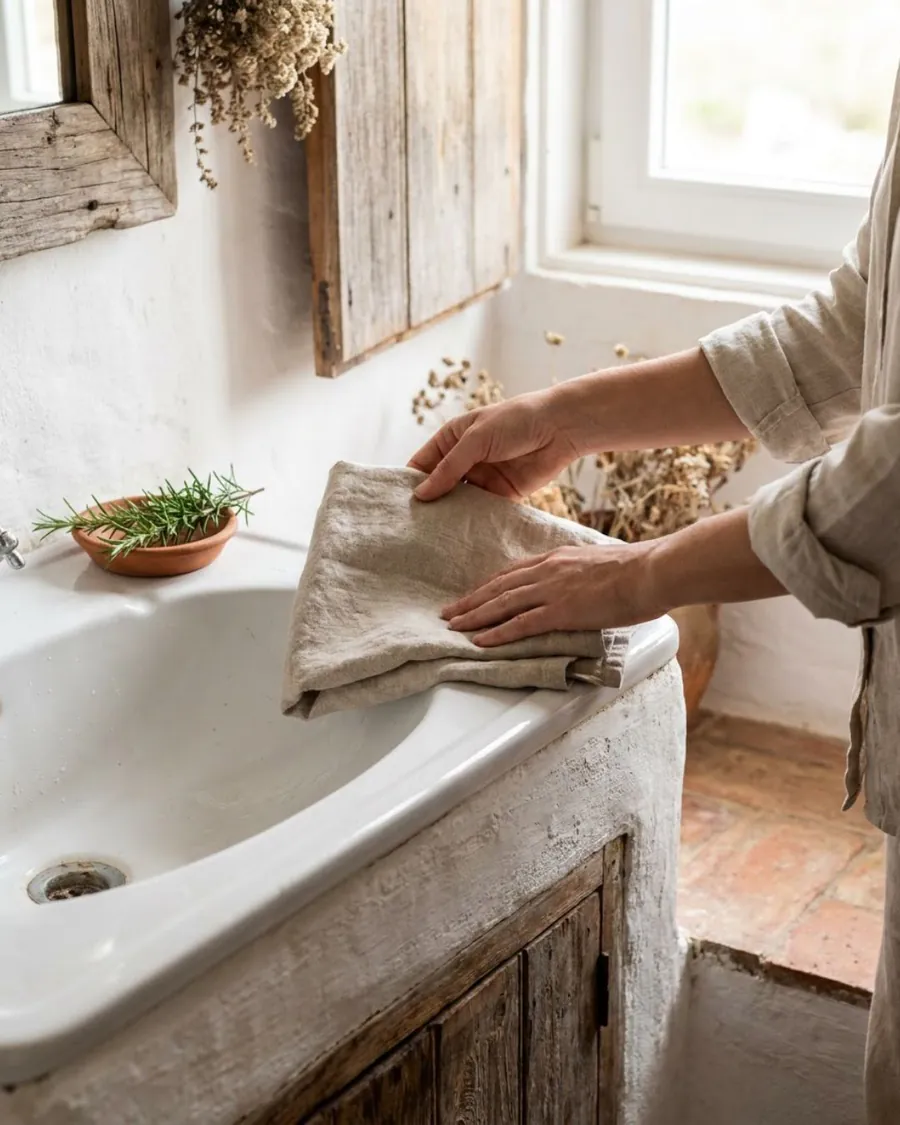

Limescale and Hard Water in the Algarve: A Practical Guide
Algarve tap water leaves a white crust on almost everything it touches. With the right habits it stays under control, and without the wrong products it never damages your stone.
Algarve homes are built on beautiful, demanding floors. A few habits keep stone and terracotta looking right for decades, and a few wrong products can mark them in minutes.
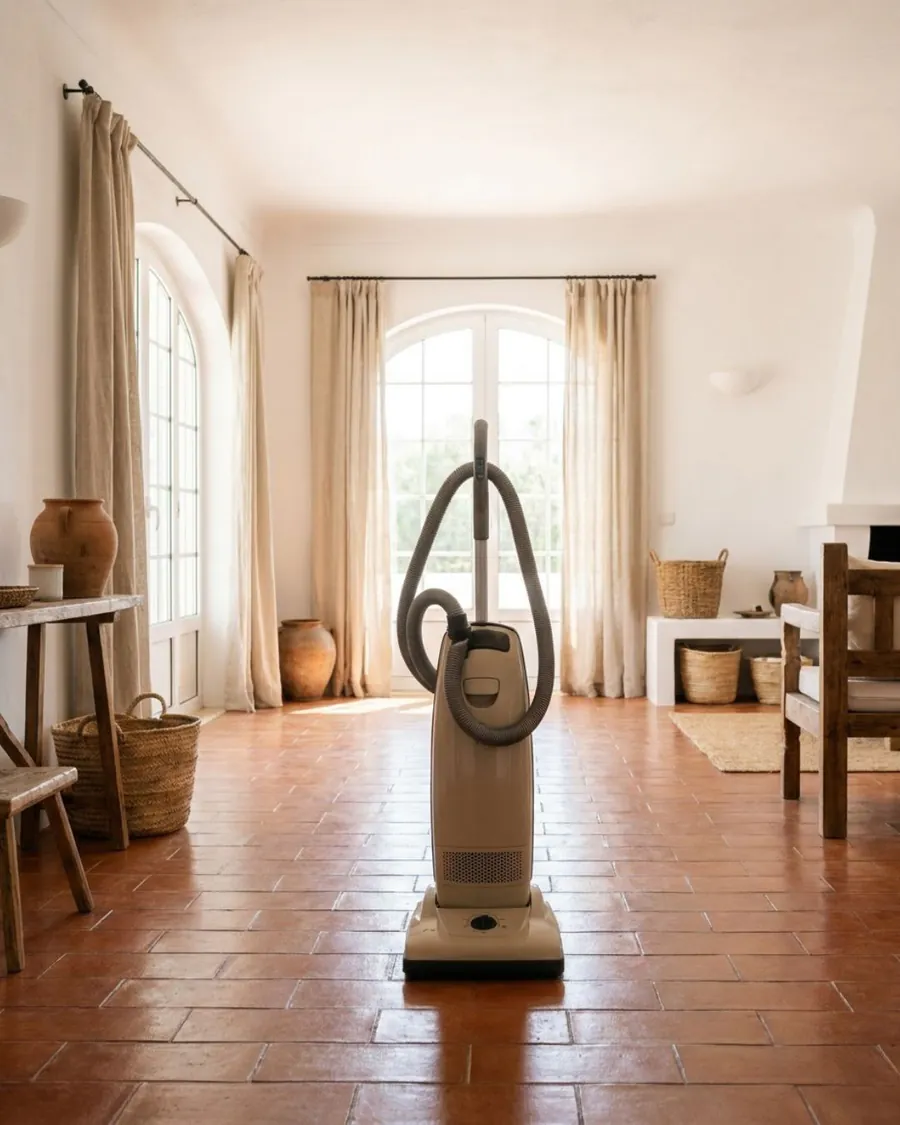
Walk into almost any home in the central Algarve and the floor tells you where you are: polished marble in a modern apartment, pale limestone in a villa, warm tijoleira or terracotta in an older moradia, ceramic tiles on the terrace. These floors are cool in summer and last for generations, but they do not all like the same treatment. Most of the floor damage we see in homes comes not from wear but from the wrong product used with good intentions.
Near the coast, every pair of shoes and every beach bag brings in fine sand. Underfoot, it acts like sandpaper, slowly dulling polished stone and wearing the surface of terracotta. Salt air leaves a thin film that attracts moisture and dirt. Two simple habits make a big difference:
Both are calcium-based stones, which means acids dissolve them. A splash of lemon juice, wine, vinegar or a bathroom limescale spray can leave a dull, rough mark, called etching, that no cloth will remove.
Traditional clay tiles are porous. When they are well sealed, water beads on the surface; when the sealant has worn, the tile drinks water, and with it dirt and stains. A simple test: put a few drops of water on the tile. If it darkens quickly, the protection has worn.
Glazed ceramic and porcelain are the most forgiving floors in the house, which is why they are everywhere in kitchens, bathrooms and terraces. The weak point is the grout. It is porous, it darkens with traffic, and in showers it collects limescale. A neutral cleaner suits daily care; a soft brush along the grout lines now and then stops dirt from setting. Our article on limescale and hard water covers bathroom floors and shower trays in more detail.
Weekly care with the right products is what a regular clean is for. But after a summer of sand and sun cream, a winter with the house closed, or a few months of the wrong products, floors often need more: grout lines lifted back to their colour, stone washed properly with a neutral cleaner, skirting boards and corners cleared. That is a job for a deep clean. Rugs on those floors can be refreshed at the same time with upholstery cleaning, using our own extraction machine. Polishing, honing and sealing stone are specialist treatments, and we will tell you if we think your floor needs one.
Tell us the typology, the floor types and anything that worries you, and request a free quote through the form.
Algarve tap water leaves a white crust on almost everything it touches. With the right habits it stays under control, and without the wrong products it never damages your stone.
We publish a price range for every service, so you know roughly where you stand before you ask. Here is what sits inside each range and how the final price is set.
A house shut all winter is not simply paused. Here is what the first clean of the season should cover, and what you can do yourself before the team arrives.
Tell us about your home in about a minute. We call you the same day with your price.